
🥩 Raw Feeding: What It Can Offer (and What to Consider)
Raw food is often discussed as having high bioavailability for dogs because it is not exposed to heat processing, which can degrade certain vitamins, minerals, and enzymes.
In its natural state, raw muscle meat, organs, and bone provide essential amino acids, fatty acids, and minerals in forms dogs can readily absorb and use.
Why Some Owners and Professionals Choose Raw
Enhanced nutrient absorption
Because raw foods are not heat-processed, more naturally occurring vitamins — including A, B-complex, and E — and essential fatty acids (Omega-3 and Omega-6) remain intact.
Enzyme preservation
Raw foods retain naturally occurring enzymes that can support digestion and nutrient absorption, particularly for dogs who struggle with heavily processed diets.
Species-appropriate structure
A thoughtfully designed raw diet uses muscle meat, organ meat, and bone, which together provide a broad spectrum of amino acids and minerals in whole-food form.
Minimal processing vs synthetic replacement
Highly processed diets often require synthetic vitamin supplementation to replace nutrients lost during high-heat cooking. Raw feeding relies primarily on whole-food nutrient sources.
Key Nutrient Sources in Raw Diets
- Organ meat: rich in vitamin A, iron, zinc
- Ground bone: provides calcium and phosphorus
- Muscle meat: primary source of essential amino acids and fats
Important Considerations (This Matters)
While raw food can be highly nutritious, balance and variety are critical.
A well-constructed raw diet often requires:
- Multiple protein sources
- Diverse organ meats
- Attention to nutrients like vitamin D and vitamin E, which may be low without proper variety
Additionally, raw feeding is not automatically “better” for every dog.
Some dogs may experience temporary gastrointestinal upset when transitioning to raw foods. This is not uncommon and does not necessarily mean raw is inappropriate — it usually means the transition was too fast.
Best practice:
- Introduce raw foods slowly and incrementally
- Start with small portions
- Monitor stool, appetite, and comfort
There is no single correct way to feed every dog. The goal is not ideology — it’s digestive comfort, nutritional adequacy, and long-term health.
A balanced, varied diet, whether raw, cooked, or a combination, is always more important than following any one feeding philosophy rigidly.
Even the highest-quality nutrients only matter if a dog can digest, absorb, and tolerate them — which is why gut health plays such a critical role in how any diet actually performs.
🦠 Probiotics & Prebiotics: Supporting Your Dog’s Gut
(Without the Hype)
Once we begin thinking beyond ingredients alone, the next question becomes how a dog’s digestive system processes food — and how the gut microbiome influences everything from stool quality to immune balance.
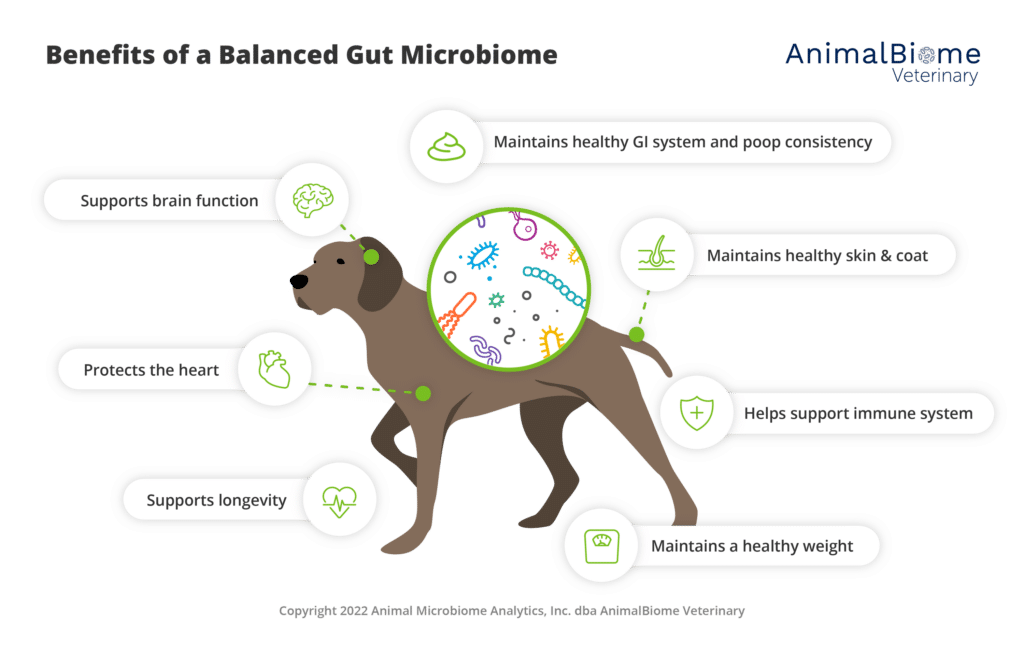
Gut health plays a major role in how dogs digest food, absorb nutrients, regulate immunity, and even manage stress. Two terms you’ll often hear in this conversation are probiotics and prebiotics — and while they’re related, they are not the same thing.
Understanding the difference helps pet parents make better, calmer decisions.
What are Probiotics?
Probiotics are live, beneficial microorganisms that support the balance of bacteria in your dog’s digestive system.
When present in adequate amounts, certain probiotic strains have been shown to:
- Improve stool quality
- Support digestion
- Increase production of beneficial short-chain fatty acids
- Help regulate immune responses
Research reviewed by Klinmalai et al. (2025) found that probiotic supplementation in dogs is associated with improved fecal consistency, healthier gut bacterial populations, and immune modulation, particularly in dogs with sensitive digestion.
“Probiotic supplementation has been associated with enhanced fecal consistency, increased production of short-chain fatty acids, and improved immune responses in dogs.”
— Klinmalai et al., 2025
Common Probiotic Strains Found in Dog Foods
Not all probiotics work the same way. Benefits depend on the specific strain, not just the word “probiotic” on the label.
Common strains used in dog foods include:
- Lactobacillus acidophilus – supports digestion and immune health
- Bifidobacterium species – supports gut balance (less heat-stable)
- Bacillus subtilis – more heat-resistant; commonly used in kibble
- Enterococcus faecium – frequently included for stool quality support
Some strains are more fragile and may not survive high-heat processing unless added after cooking or protected through encapsulation.
What Are Prebiotics
Prebiotics are not bacteria.
They are fibers and compounds that feed beneficial gut bacteria already living in your dog’s digestive tract.
Think of prebiotics as fertilizer for the gut.
Common prebiotic ingredients include:
- Chicory root
- Inulin
- Beet pulp
- Pumpkin
- Certain whole grains and vegetables
Prebiotics help beneficial bacteria thrive, which can indirectly improve digestion, stool quality, and nutrient absorption.
Probiotics VS. Prebiotics: Why Both Matter
Probiotics
- Add beneficial bacteria
- Strain-specific benefits
- Can be fragile
- Often added as supplements
Prebiotics
- Feed existing good bacteria
- Broad gut support
- Very stable
- Naturally present in foods
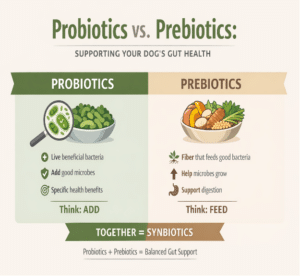
When used together, they are often referred to as synbiotics, which can be more effective than either alone.
How This Connects to Raw, Cooked and Whole Foods
Whole foods — whether raw or lightly cooked — naturally contain prebiotic fibers and supportive nutrients that help maintain gut balance.
Raw and minimally processed foods may:
- Preserve natural enzymes
- Support microbial diversity
- Reduce reliance on synthetic additives
However, probiotics themselves are living organisms, and their effectiveness depends on:
- Proper storage
- Viable colony counts
- The dog’s individual tolerance
A dog does not need a “perfect” gut supplement to be healthy — but gut support can be helpful during:
- Diet changes
- Stressful events
- Antibiotic use
- Digestive sensitivity
Finding Probiotics & Prebiotics in Commercial Dog Food
When evaluating dog food labels, look for:
- Specific probiotic strains listed by name
- Guaranteed CFU counts (colony-forming units)
- Probiotics listed after cooking or in a separate guarantee
- Prebiotic ingredients such as chicory root, pumpkin, or beet pulp
Many high-quality commercial diets include both prebiotics and probiotics, though effectiveness varies depending on formulation.
How Much is Helpful?
There is no single “right” dose for every dog, but research-backed products typically contain:
- Millions to billions of CFUs per day, depending on dog size and strain
More is not always better.
Introducing probiotics too quickly can cause temporary gas or loose stool, especially in sensitive dogs.
Best practice:
- Start small
- Increase gradually
- Monitor stool and comfort
The Takeaway
Gut health is not about trends or perfection.
Whether probiotics come from:
- Commercial food
- Supplements
- Fermented or whole-food sources
The goal is the same:
support digestion, nutrient absorption, and overall comfort — without overwhelming the dog’s system.
A balanced diet, thoughtful transitions, and attention to the individual dog will always matter more than chasing any single ingredient.
📚 Source (APA)
Klinmalai, P., Kamonpatana, P., Sodsai, J., Srisa, A., Promhuad, K., Laorenza, Y., Kovitvadhi, A., Areerat, S., Seubsai, A., Nakphaichit, M., & Harnkarnsujarit, N. (2025). Probiotics in pet food: A decade of research, patents, and market trends. Foods, 14(19), 3307. https://doi.org/10.3390/foods14193307
🧊 Frozen Treats & Enrichment: Gut-Friendly, Budget-Friendly, Dog-Approved
How food is delivered matters just as much as what’s in it — especially for dogs with sensitive digestion, puppies in transition, or households introducing new foods slowly.
Frozen treats are more than a summer trend — they’re a powerful enrichment tool that supports digestion, teething, mental stimulation, and calm behavior.
When built thoughtfully, frozen treats can:
- Slow eating
- Support gut health
- Reduce boredom and destructive behaviors
- Help puppies through teething
- Make new foods easier to tolerate
Reduces resource guarding, builds trust, and creates connection—not chaos.
These small steps create immediate change for both species.
And the best part? You can make them right at home with simple pantry items.
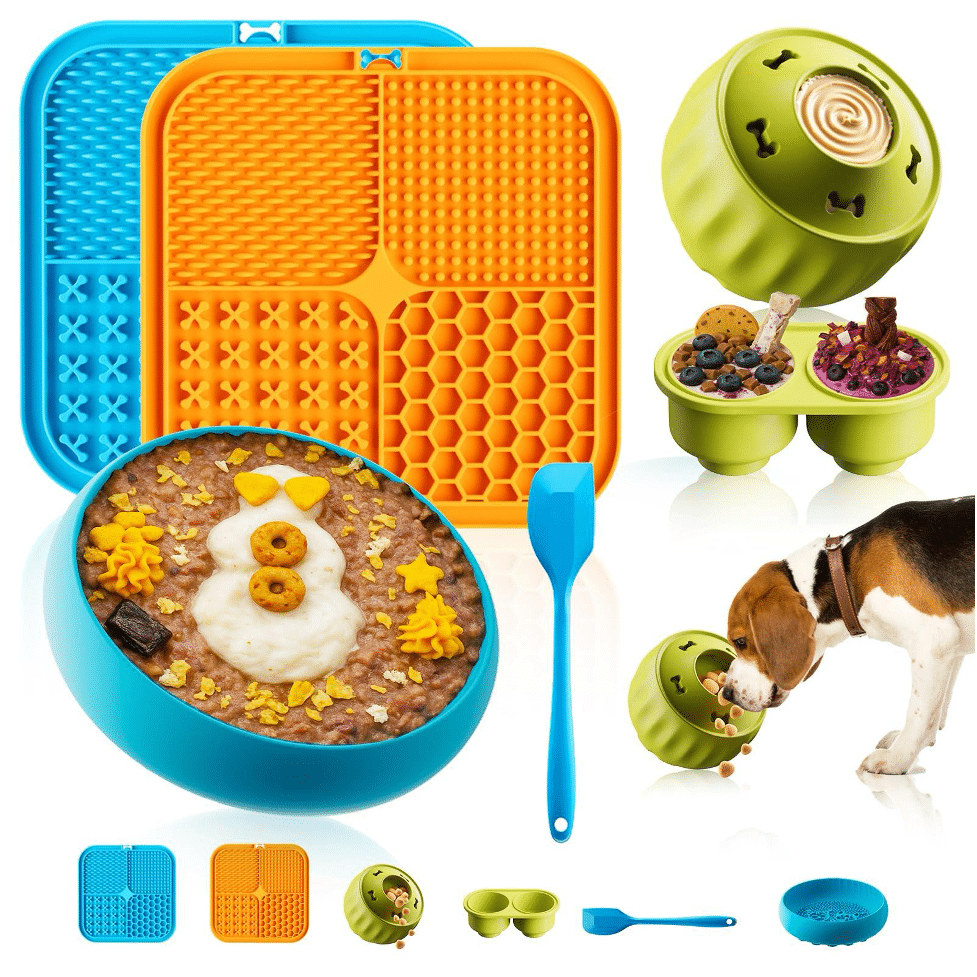
Why Frozen Treats Work So Well
Slower consumption = easier digestion
Frozen foods take longer to eat, which can reduce gulping and stomach upset — especially helpful when introducing probiotics, prebiotics, or new proteins.
Great for puppies and teething dogs
Frozen vegetables like carrots or lettuce give puppies something appropriate to chew and shred — satisfying natural destruction needs without destroying your furniture.
Mental enrichment without overfeeding
Freezing adds time and challenge without adding calories.
Accessible for every household
No special diet required. No expensive supplements needed.
Best Tools for Frozen Enrichment
You don’t need fancy gear — but these tools make things easy and durable:
- KONG toys – classic, durable, and perfect for layered fillings
- Woof Pupsicle molds – designed for frozen treats that last longer
- Silicone freezer trays or molds (ice cube trays work great)
- Lick mats (silicone preferred for freezing)
💡 Pro tip: Shallow molds freeze faster and are easier for beginners or sensitive dogs.
Gut-Friendly Frozen Fillings (Mix & Match)
These ingredients naturally support prebiotic and probiotic activity while staying gentle on the stomach.
🥣 Probiotic Bases (Use Plain & Unsweetened)
- Plain Greek yogurt (xylitol-free)
- Kefir (dog-tolerant, start small)
These provide live beneficial bacteria that can support digestion and stool quality.
🥕 Prebiotic & Fiber-Rich Add-Ins
- Shredded carrots
- Pumpkin
- Zucchini
- Kale (small amounts)
- Green beans
These fibers help feed good gut bacteria and support regular digestion.
 Fun, Safe Extras
- Blueberries
- Strawberries
- Mashed banana (small amounts)
- Apples (no seeds)
Fruit should stay a treat, not the base — but it adds flavor and enrichment.
Frozen Vegetables for Puppies (Simple & Effective)
For teething puppies or high-drive chewers:
- Frozen carrots
- Frozen lettuce hearts
- Frozen green beans
These provide:
- Gum relief
- Safe shredding
- Low-calorie enrichment
Always supervise and size appropriately.
🧊 Simple “Dog Ice Cream” Recipe (Budget-Friendly)
Base (choose one):
- ½ cup plain Greek yogurt
- OR ½ cup diluted kefir
Mix-ins (pick 2–3):
- 1 tbsp shredded carrot
- 1 tbsp mashed pumpkin
- 1 tbsp blueberries (lightly mashed)
- A sprinkle of chopped zucchini
Optional layers:
- Freeze base first, then add mix-ins
- Layer different textures for longer engagement
Freeze: 2–4 hours
Serve: supervised, size-appropriate portions
➡️ This recipe is fully interchangeable — swap ingredients based on what you already have.
Safety & Common-Sense Guidelines
- Start small, especially with probiotics
- Introduce one new ingredient at a time
- Avoid xylitol, chocolate, grapes, onions, garlic
- Supervise frozen chews
- Adjust portions for dog size and tolerance
Frozen treats should support digestion and enrichment, not replace balanced meals.
Why Frozen Treats Fit Into a Balanced Feeding Plan
Frozen feeding works beautifully alongside:
- Raw or lightly cooked diets
- Commercial kibble or wet food
- Probiotic or prebiotic support
It’s not about feeding extremes — it’s about delivery, tolerance, and intention.
When dogs are mentally satisfied and digestively comfortable, behavior improves too — and that’s where nutrition and training truly meet.
Raw foods, gut-supportive ingredients, and frozen enrichment aren’t separate feeding philosophies — they’re tools. When used thoughtfully and in combination, they support digestion, mental satisfaction, and long-term health without requiring extremes or perfection.